Laser tattoo removal
Safe, professional laser tattoo removal using advanced Q-Switched technology.
- Advanced Alma Harmony Q-Switched laser technology
- Nd:YAG 1064 nm for black and dark pigments
- KTP 532 nm for selected red, orange and yellow pigments
- Suitable for amateur and professional tattoos
- Treatments usually spaced 8–12 weeks apart
- Multiple sessions required
- Progressive fading after each treatment
- Strict aftercare improves healing
About tattoo removal
How laser removal works, and the lasers we use
About tattoo removal
How laser removal works, and the lasers we useLaser tattoo removal works by delivering extremely short pulses of high-energy light into the tattoo pigment. The laser energy breaks the ink particles into tiny fragments, and your body's immune system gradually clears them over the following weeks.
Different tattoo colours absorb different wavelengths of light, which is why more than one laser wavelength may be needed during your treatment course.
At Blush Clinic we use the Alma Harmony Q-Switched laser platform, including:
- Q-Switched Nd:YAG 1064 nm: ideal for black, dark blue and darker tattoo pigments
- Q-Switched KTP 532 nm: used for selected red, orange and yellow tattoo pigments where appropriate

Because every tattoo is unique, treatment is always personalised following consultation.
Whether you'd like to remove an unwanted tattoo, fade it for a cover-up, or lighten permanent makeup, every treatment is tailored to your tattoo, skin type and goals, helping you achieve the greatest possible fading while protecting the surrounding skin.
Why people choose tattoo removal
Common reasons patients come to us
Why people choose tattoo removal
Common reasons patients come to usPatients choose tattoo removal for many different reasons, including:
- Regretting an old tattoo
- Poor-quality tattoo work
- Tattoos that no longer reflect their lifestyle
- Preparing for a new cover-up tattoo
- Professional or career reasons
- Cosmetic improvement
- Relationship-related tattoos
- Faded or distorted tattoos
- Poor quality permanent makeup
Many patients simply want to reduce the visibility of a tattoo rather than remove it completely.
Treatment options
Assessment, how treatment works and our two wavelengths
Treatment options
Assessment, how treatment works and our two wavelengthsAssessment
Before treatment, your tattoo will be carefully assessed, including:
- Tattoo colours
- Age of the tattoo
- Professional versus amateur tattoo
- Size
- Depth of pigment
- Body location
- Previous laser treatments
- Your skin type
How treatment works
During treatment, the laser delivers ultra-short pulses of energy that target the tattoo pigment while leaving the surrounding skin largely unaffected.
As the shattered pigment particles are cleared naturally by your immune system over the following weeks, the tattoo gradually fades with each treatment.
Some tattoos respond quickly, while others require a longer course of treatment.
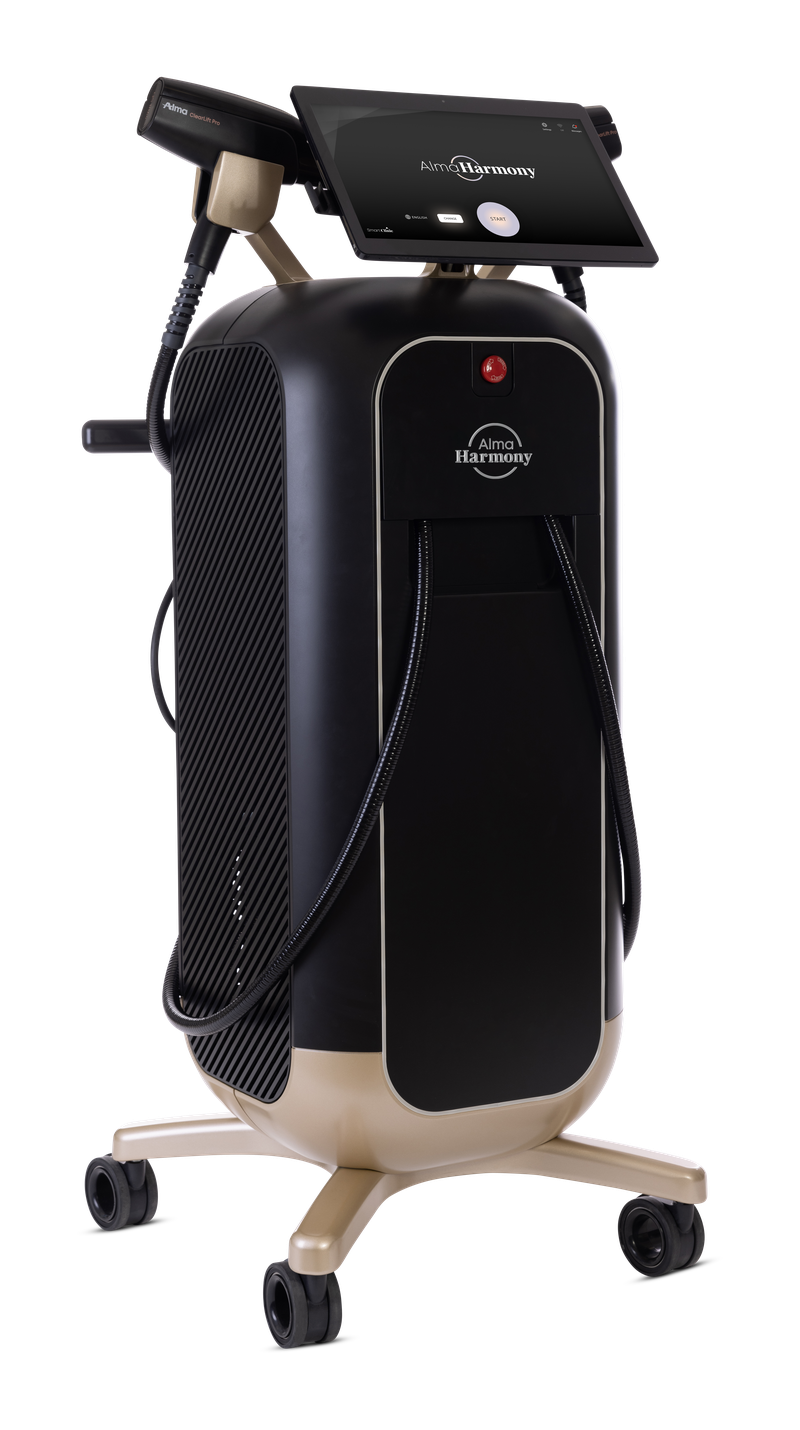
Q-Switched Nd:YAG (1064 nm)
Our primary tattoo removal laser. It is best suited for:
- Black tattoos
- Dark blue tattoos
- Dark grey pigments
- Professional tattoos
- Amateur tattoos
The 1064 nm wavelength penetrates deeply while being relatively safe for a wide range of skin types.
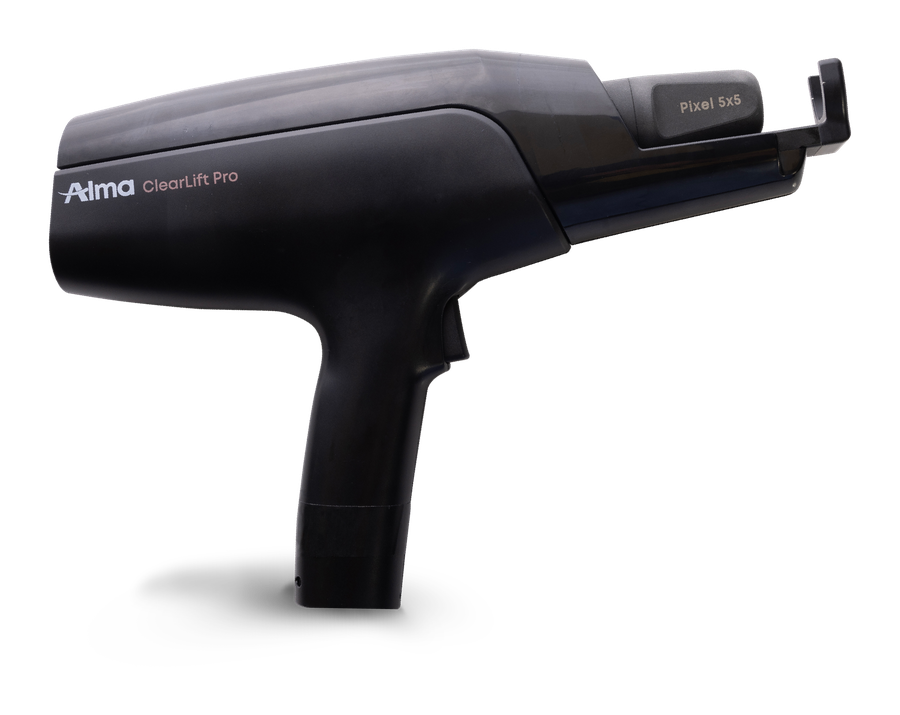
Q-Switched KTP (532 nm)
Used where appropriate for lighter coloured pigments including:
- Red
- Orange
- Yellow
Certain tattoo colours such as light blue and light green and some yellow inks can be more resistant to treatment, and complete removal cannot always be guaranteed.
What treatment can do
Fading, cover-up preparation and gradual results
What treatment can do
Fading, cover-up preparation and gradual resultsLaser tattoo removal can:
- Significantly fade unwanted tattoos
- Prepare tattoos for successful cover-up work
- Improve cosmetic appearance
- Avoid surgical excision
- Leave surrounding skin largely intact
- Allow gradual, controlled removal
Most patients notice progressive fading after each treatment session.
Is it right for me?
Who tattoo removal suits
Is it right for me?
Who tattoo removal suitsTattoo removal may be suitable if you:
- Wish to remove an unwanted tattoo
- Want to fade a tattoo before a cover-up
- Are in good general health
- Have realistic expectations
- Are willing to complete a treatment course
- Can follow aftercare instructions carefully
Not everyone is suitable for immediate treatment. A laser consultation and patch test will determine the safest approach.
Aftercare and recovery
What to expect after treatment
Aftercare and recovery
What to expect after treatmentFollowing treatment it is normal to experience:
- Redness
- Mild swelling
- Whitening (frosting) immediately after treatment
- Tenderness
- Small blisters in some patients
- Light crusting
Most reactions settle within several days. The treated area should be kept clean, protected and allowed to heal naturally before the next session.
Downtime
- Downtime is usually minimal
- Most clients return to normal activities the same day
- Mild redness or puffiness may last 1–3 days
- Light flaking or scabbing can occur, especially on the brows
Avoid make-up on the treated area until the skin has settled (usually 24–48 hours, longer if scabbing occurs).
Depending on where the tattoo is, wear loose-fitting clothing to avoid rubbing or irritation after treatment.
See the difference
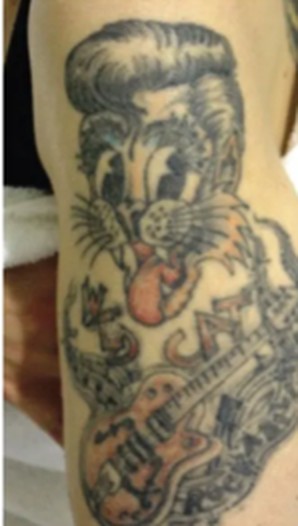
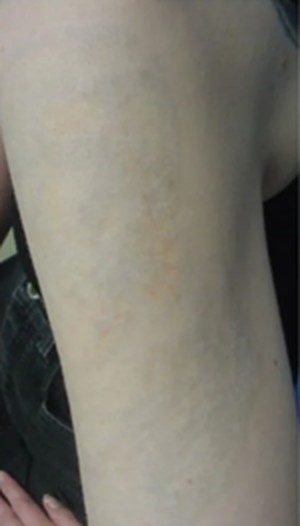
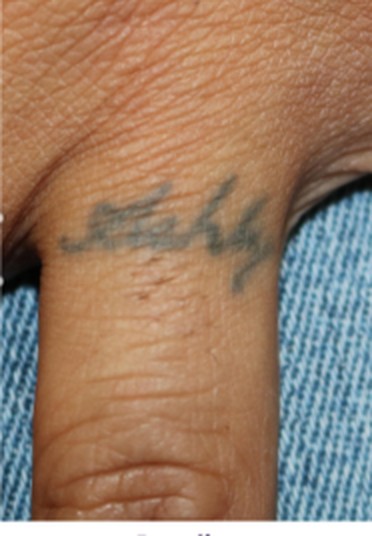
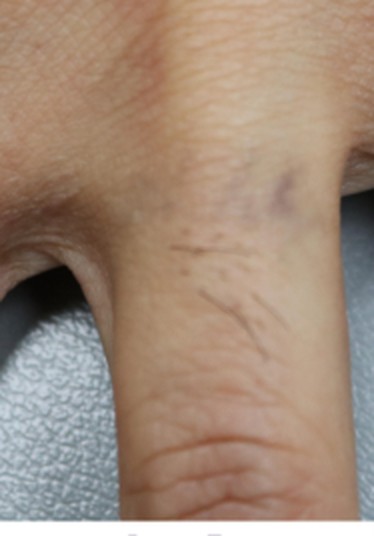
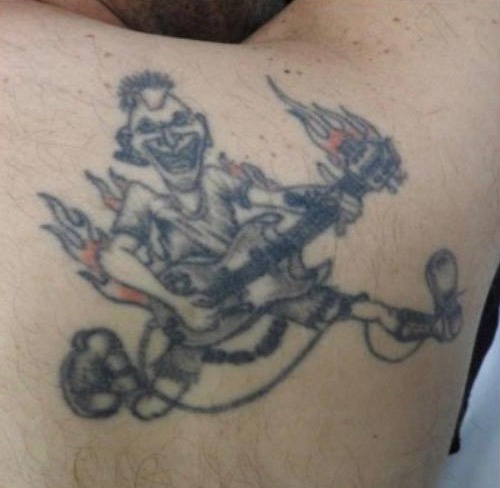
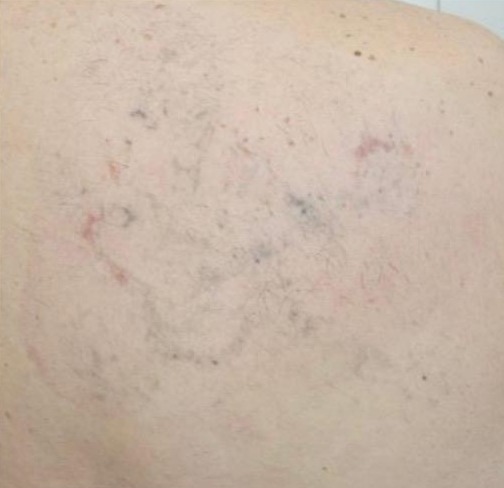
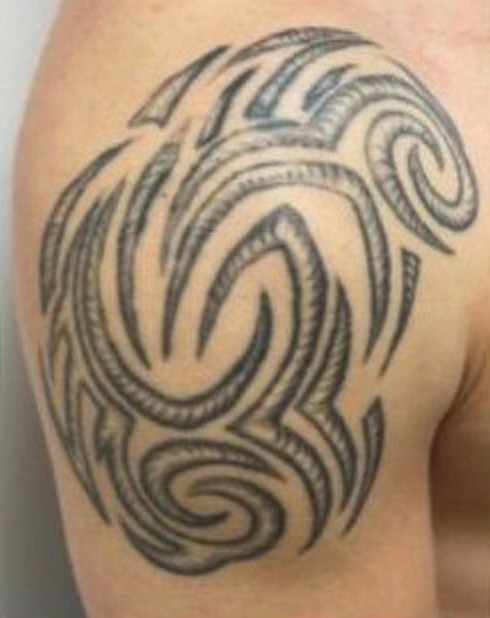
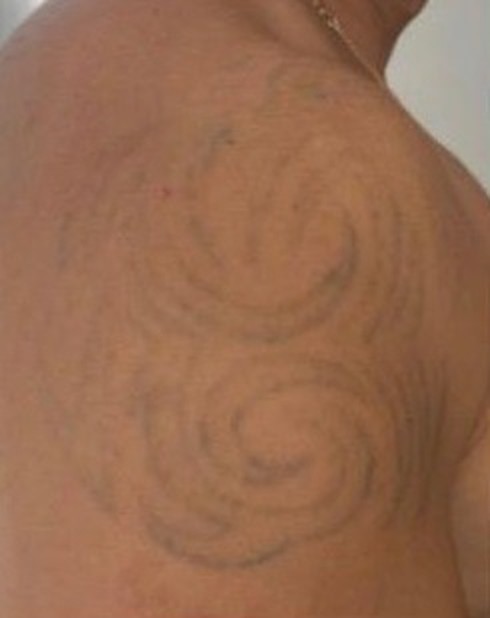
Swipe to see the next pair →
Results vary.

Questions we're asked
What is the Harmony laser?
What is the Harmony laser?
The Harmony laser is a medical-grade laser system designed to safely and effectively remove tattoo and permanent makeup pigment from the skin. It uses advanced technology to target ink without damaging the surrounding skin. At Blush Clinic we use the latest version of the Harmony laser, which allows us to treat different pigment colours using different laser tips.
Does the Harmony laser use heat to remove tattoos?
Does the Harmony laser use heat to remove tattoos?
Some clinics use Nd:YAG lasers to remove tattoos, which can lead to burning and scarring due to excessive energy and heat. The Harmony laser does not burn or melt pigment. It works using a photo-acoustic effect, not heat.
This means:
- The laser delivers extremely fast pulses of energy
- These pulses create a shockwave
- The shockwave shatters the tattoo pigment into tiny particles
- The surrounding skin is largely unaffected
What happens during a laser tattoo removal treatment?
What happens during a laser tattoo removal treatment?
1. The laser targets the ink, not your skin. The laser light is designed to be absorbed mainly by tattoo pigment, not normal skin. This allows us to treat tattoos safely, even on delicate areas such as the eyebrows and face.
2. The ink is shattered, not heated. The laser pulse is extremely quick (measured in nanoseconds). This creates a gentle shock effect that breaks the ink down into microscopic particles rather than heating the surrounding skin. You may notice a temporary whitening or “frosting” of the skin immediately after treatment. This is normal and settles quickly.
3. Your body removes the pigment. Once the ink particles are broken down, your immune system gradually clears them through the lymphatic system over the following weeks. This is why:
- Results continue to improve after each session
- Sessions are usually spaced 8–12 weeks apart
- Multiple sessions are usually needed for best results
How does the 1064 nm laser work?
How does the 1064 nm laser work?
The 1064 nm laser tip is primarily used for:
- Black pigment
- Dark brown pigment
- Dark blue pigment
It is ideal for eyebrow and PMU tattoo removal because:
- It penetrates deeply and safely
- It has minimal interaction with natural skin colour
- It is suitable for all skin types
What is the KTP (532 nm) laser used for?
What is the KTP (532 nm) laser used for?
The KTP laser tip targets lighter and warmer pigments, such as:
- Red
- Orange
- Peach
- Some warm or reddish brown tones
Not all clients need KTP treatment. It is used only when the pigment colour requires it, allowing for more complete and even fading.
What does the treatment feel like?
What does the treatment feel like?
Most patients describe the sensation as a sharp snapping or flicking feeling, similar to an elastic band against the skin.
Discomfort varies depending on tattoo location, size and individual sensitivity. Cooling measures are used to improve comfort during treatment.
How many laser sessions will I need?
How many laser sessions will I need?
There is no fixed number of treatments because every tattoo is different. Factors such as the tattoo's age, colours, depth of ink, body location and whether it was professionally or amateurly applied all influence the number of sessions required. Tattoo and PMU pigment sits at different depths within the skin.
Each session breaks down more pigment and allows your body time to clear it naturally.
Many amateur black tattoos respond within 4–8 treatments, while professional, multicoloured tattoos often require 8–15 sessions or more. Some tattoos cannot be completely removed despite multiple treatments.
How much fading can I expect?
How much fading can I expect?
Most patients notice progressive fading after every session. While some tattoos can fade by 90–95% or more, complete removal cannot be guaranteed. Certain pigments, particularly green, turquoise, fluorescent colours and some yellows, can be much more resistant to laser treatment.
Many patients are delighted with significant fading, particularly when preparing for a cover-up tattoo.
How long should I wait between laser treatments?
How long should I wait between laser treatments?
Laser sessions should generally be spaced at least 8 weeks apart, although 8–12 weeks is often preferable. Your body continues clearing fragmented ink for many weeks after each treatment, so allowing adequate healing time can improve results and reduce the risk of complications. Rushing treatments too close together does not usually speed up tattoo removal and may increase the risk of scarring or pigment changes.
What should I expect after a laser tattoo removal treatment?
What should I expect after a laser tattoo removal treatment?
Immediately after treatment, it is normal to see a white “frosting” effect over the tattoo. This usually settles within minutes to an hour. In the hours to days following treatment, you may experience:
- Redness and swelling
- Warmth or tenderness in the treated area
- Mild blistering or scabbing in some cases
These reactions are expected and are part of the normal healing process. The tattoo will then gradually begin to fade over the following weeks as the body clears the broken-down pigment. Healing time varies depending on the size and location of the tattoo and your individual skin response.
Is there down-time after laser tattoo removal?
Is there down-time after laser tattoo removal?
Downtime is usually minimal. Most clients return to normal activities the same day. Mild redness or puffiness may last 1–3 days, and light flaking or scabbing can occur, especially on the brows.
Avoid make-up on the treated area until the skin has settled (usually 24–48 hours, longer if scabbing occurs).
What should I do after laser tattoo removal?
What should I do after laser tattoo removal?
Good aftercare is essential for safe healing and the best possible results. After treatment you should:
- Keep the treated area clean and dry for the first 24 hours.
- Apply the recommended healing ointment if advised by your practitioner.
- Cover the area with a sterile dressing if required.
- Avoid touching, picking, scratching or bursting any blisters, as this increases the risk of infection and scarring.
- Avoid makeup, swimming pools, hot tubs, saunas and steam rooms until the skin has fully healed.
- Avoid strenuous exercise for the first 24–48 hours if it causes excessive sweating or friction.
- Protect the area from sun exposure and use a broad-spectrum SPF 50+ once the skin has healed.
- Wear loose clothing over the treated area where possible to minimise rubbing.
Contact the clinic if you experience increasing redness, pus, worsening pain or any signs of infection.
What are the risks?
What are the risks?
Laser tattoo removal is generally safe when performed by trained professionals. Possible side effects include:
- Temporary redness and swelling
- Blistering or scabbing
- Temporary pigmentation changes
- Rarely, scarring
All risks and aftercare instructions are explained prior to treatment.
What are the contraindications to laser tattoo removal?
What are the contraindications to laser tattoo removal?
Laser tattoo removal cannot be performed if you:
- Are pregnant or breastfeeding
- Have an active infection, inflammation or open wound in the treatment area
- Have a history of abnormal or keloid scarring
- Are undergoing cancer treatment
- Have photosensitive epilepsy
- Have had recent sun exposure or sunburn on the area
Does laser tattoo removal hurt?
Does laser tattoo removal hurt?
Most patients describe the sensation as similar to the snapping of a strong elastic band against the skin. The level of discomfort varies depending on the location of the tattoo and individual pain tolerance. Cooling measures are used to improve comfort during treatment.
Can every tattoo colour be removed?
Can every tattoo colour be removed?
No. Black and dark blue pigments usually respond best to laser treatment. Red and orange pigments often respond well to the 532 nm KTP wavelength, while some yellow pigments may respond, although results can be less predictable. Certain colours, particularly green, turquoise, fluorescent inks and some cosmetic pigments, can be much more resistant to treatment.
During your consultation, we'll assess your tattoo and explain how likely it is to respond, along with the estimated number of treatments required.
Can laser remove permanent makeup (PMU) or eyebrow tattoos?
Can laser remove permanent makeup (PMU) or eyebrow tattoos?
Yes, laser treatment can often be used to lighten or remove unwanted permanent makeup, including eyebrow tattoos. However, cosmetic tattoo pigments behave differently from traditional tattoo inks and may contain a mixture of colours, including iron oxide or titanium dioxide.
In some cases, these pigments can darken immediately after the first laser treatment because of the iron oxide, before gradually fading with subsequent treatments. This temporary darkening is a recognised reaction with certain permanent makeup pigments and will be discussed with you during your consultation.
For this reason, we always carry out a careful assessment and may recommend a small test patch before treating the entire area. The number of treatments required varies depending on the pigment used, its depth and how your skin responds.
How much does tattoo removal cost?
How much does tattoo removal cost?
The cost of laser removal depends on several factors, including the size of the tattoo and the number of treatments it will require. Following your consultation, we can provide you with a price estimate for the treatment series.
Can I remove only part of a tattoo?
Can I remove only part of a tattoo?
Yes. We can customise treatments to fade tattoos to help prepare for tattoo cover-ups, and we can remove parts of a tattoo.
Can I lighten the tattoo to have another one put on top?
Can I lighten the tattoo to have another one put on top?
Yes, tattoos can be lightened in preparation for a cover-up tattoo. We recommend that you wait six weeks between your last treatment and when you have the new tattoo completed.
Can I have a new tattoo after laser tattoo removal?
Can I have a new tattoo after laser tattoo removal?
Yes. Many patients choose laser treatment to fade an existing tattoo before having a cover-up. Your practitioner will advise you when the skin has healed sufficiently and enough fading has occurred for your tattoo artist to achieve the best possible result.
Will laser tattoo removal leave a scar?
Will laser tattoo removal leave a scar?
When performed correctly and followed by appropriate aftercare, laser tattoo removal has a low risk of scarring. However, pre-existing tattoo scarring, picking the treated area, infection or poor healing can all increase the risk.
Is this treatment safe for all skin types?
Is this treatment safe for all skin types?
Laser tattoo removal can be performed on a range of skin types, but settings and treatment plans are carefully tailored to minimise risk. This is assessed during consultation.
How should I prepare for treatment?
How should I prepare for treatment?
Before your appointment, you may be advised to:
- Avoid sun exposure and sunbeds for 4 weeks
- Always wear SPF 50 and reapply each day, whether it is sunny or not
- Avoid self-tan on the area
- Avoid shaving, waxing or exfoliating before treatment
- Remove all make-up, creams and oils before treatment
- Keep the skin clean and free of active irritation
- Inform your clinician of all medications and medical conditions
How can I book a laser tattoo removal consultation?
How can I book a laser tattoo removal consultation?
You can arrange a laser consultation and patch test through the Blush Clinic online booking system or by phoning 087 422 3492 and booking over the phone.

Dr Rowena Hughes
MB BCh BAO, MSc Pharm Med, MBA, PGDip Obs & Gynae, DDermMedical Director, Blush Clinic, Kells · Founder, Dr Rowena's Aesthetics Academy
Blush Clinic is a doctor-led aesthetic and dermatology clinic where every treatment protocol has been developed under the guidance of Dr Rowena Hughes, who holds a postgraduate diploma in Dermatology from the Royal College of Physicians in Ireland and has extensive experience in medical skin conditions and advanced laser treatments.
At Blush Clinic, tattoo removal is performed using advanced Alma Harmony Q-Switched laser technology by our experienced laser team.
Every patient receives a comprehensive consultation to assess their tattoo, skin type and treatment goals before beginning treatment. Treatments are carried out by Dr Rowena Hughes and Rebecca Hughes, both trained in the safe use of advanced laser technology.
We understand that every tattoo is different. Factors such as the tattoo's colours, age, depth, location and your skin type all influence the treatment plan. Our aim is to achieve the greatest possible fading while protecting the surrounding skin and providing honest advice about the results you can realistically expect.
Ready to book?
Book online any time. To pay by card over the phone, or to reschedule or cancel, call 087 422 3492, Monday to Friday, 8am to 6pm.