Actinic keratosis
Expert diagnosis and treatment of sun-damaged skin and precancerous lesions by Dr Rowena Hughes.
- Actinic keratoses are caused by long-term sun exposure.
- They are considered precancerous skin lesions.
- Commonly affect the face, scalp, ears, chest, and hands.
- Often feel rough before they become visible.
- Fair-skinned individuals are at highest risk.
- They may appear red, pink, skin-coloured, or brown.
- Some can progress to squamous cell carcinoma.
- Treatment options include prescription creams and cryotherapy.
- Daily sunscreen use helps prevent new lesions.
- Early diagnosis and treatment are important for long-term skin health.
About actinic keratosis
What it is, and how we approach it
About actinic keratosis
What it is, and how we approach itActinic keratoses (AKs), sometimes called solar keratoses, are rough, scaly patches of skin that develop as a result of long-term sun exposure. They are extremely common in Ireland, particularly in fair-skinned individuals and those who have spent many years working or enjoying leisure activities outdoors.
Actinic keratoses are considered precancerous lesions. While many remain stable for years, some can progress to squamous cell carcinoma, a type of skin cancer. For this reason, early diagnosis and treatment are important.
AKs commonly occur on sun-exposed areas such as the face, scalp, ears, nose, chest, forearms, and backs of the hands. Patients often describe them as rough, dry, crusty patches that repeatedly return despite moisturising.
At Blush Clinic, Dr Rowena Hughes provides comprehensive skin assessments, diagnosis of suspicious lesions, treatment of actinic keratoses, and referral where necessary if skin cancer is suspected.
How we can help
Why people come to see us
How we can help
Why people come to see usPatients commonly seek assessment because they have:
- Rough, scaly patches that do not heal
- Persistent crusting or flaking skin
- Red or pink patches on sun-exposed areas
- Lesions that repeatedly return after peeling off
- Tender or sensitive spots on the face or scalp
- Concerns about skin cancer
- Significant sun damage and multiple rough patches
- A history of previous actinic keratoses or skin cancers
Many patients report that they can feel the lesion before they can clearly see it.
Treatment options
How we treat it
Treatment options
How we treat itEvery consultation begins with a detailed skin assessment and examination of the affected area.
Clinical Assessment
Your consultation may include:
- Detailed history and skin examination
- Assessment of sun damage
- Identification of actinic keratoses
- Examination for features suggestive of skin cancer
- Advice regarding prevention and future skin surveillance
Prescription Treatments
Depending on the type, size, number, and location of lesions, treatment options may include:
- Topical 5-fluorouracil (Efudix)
- Topical diclofenac gel
- Topical imiquimod
- Specific AK sunscream
Cryotherapy
Selected lesions may be suitable for treatment using cryotherapy (freezing treatment), which destroys abnormal cells and encourages healthy skin regeneration. Please note we do not practice cryotherapy at Blush Clinic at the moment.
Laser
Selected actinic keratoses and areas of sun-damaged skin may be suitable for treatment using the Alma Harmony SupErb Er:YAG laser.
This ablative laser removes damaged surface skin cells and stimulates the regeneration of healthier skin. In suitable patients, it can be used to improve the appearance of sun-damaged skin and assist in the treatment of selected actinic keratoses, particularly when multiple lesions are present within a larger area of sun damage.
The suitability of laser treatment depends on factors including the size, location, thickness, and number of lesions. A thorough clinical assessment is always performed before treatment is recommended.
Referral for Further Assessment
If a lesion appears suspicious for squamous cell carcinoma, basal cell carcinoma, melanoma, or another skin cancer, referral to a surgical dermatologist may be recommended.
What treatment can do
Realistic expectations
What treatment can do
Realistic expectationsTreatment may help:
- Remove precancerous lesions
- Reduce the risk of progression to skin cancer
- Improve skin texture and roughness
- Improve the appearance of sun-damaged skin
- Treat multiple areas of field cancerisation simultaneously
- Stimulate skin renewal and regeneration
- Reduce crusting and irritation
- Identify suspicious lesions at an earlier stage
- Improve long-term skin health
Is it right for me?
Who it suits
Is it right for me?
Who it suitsThis service may be suitable for adults who have:
- Rough or scaly patches of skin
- Persistent sun-damaged areas
- Recurrent crusting lesions
- Fair skin with a history of significant sun exposure
- Previous actinic keratoses
- Previous skin cancer
- Concerns about changing skin lesions
Actinic keratoses are particularly common in fair-skinned individuals over the age of 40.
Aftercare and results
What to expect afterwards
Aftercare and results
What to expect afterwardsDuring a treatment course, patients may experience:
- Redness
- Irritation
- Flaking or peeling
- Crusting
- Increased sensitivity
Some prescription treatments intentionally create inflammation as abnormal cells are destroyed. This reaction is often expected and may indicate that the treatment is working.
Detailed aftercare advice will be provided based on the treatment selected.
Sun protection remains an essential part of long-term management.
The treatment journey
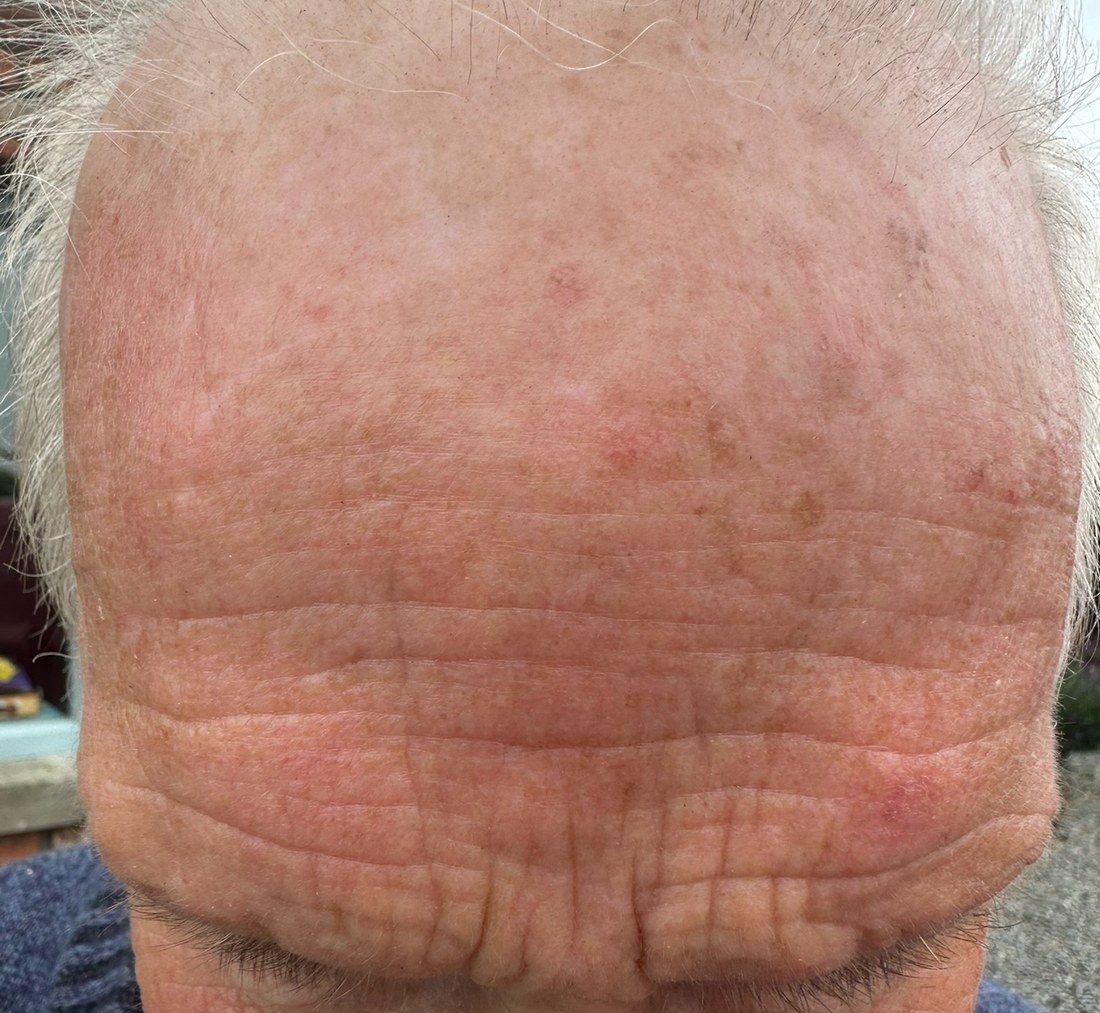
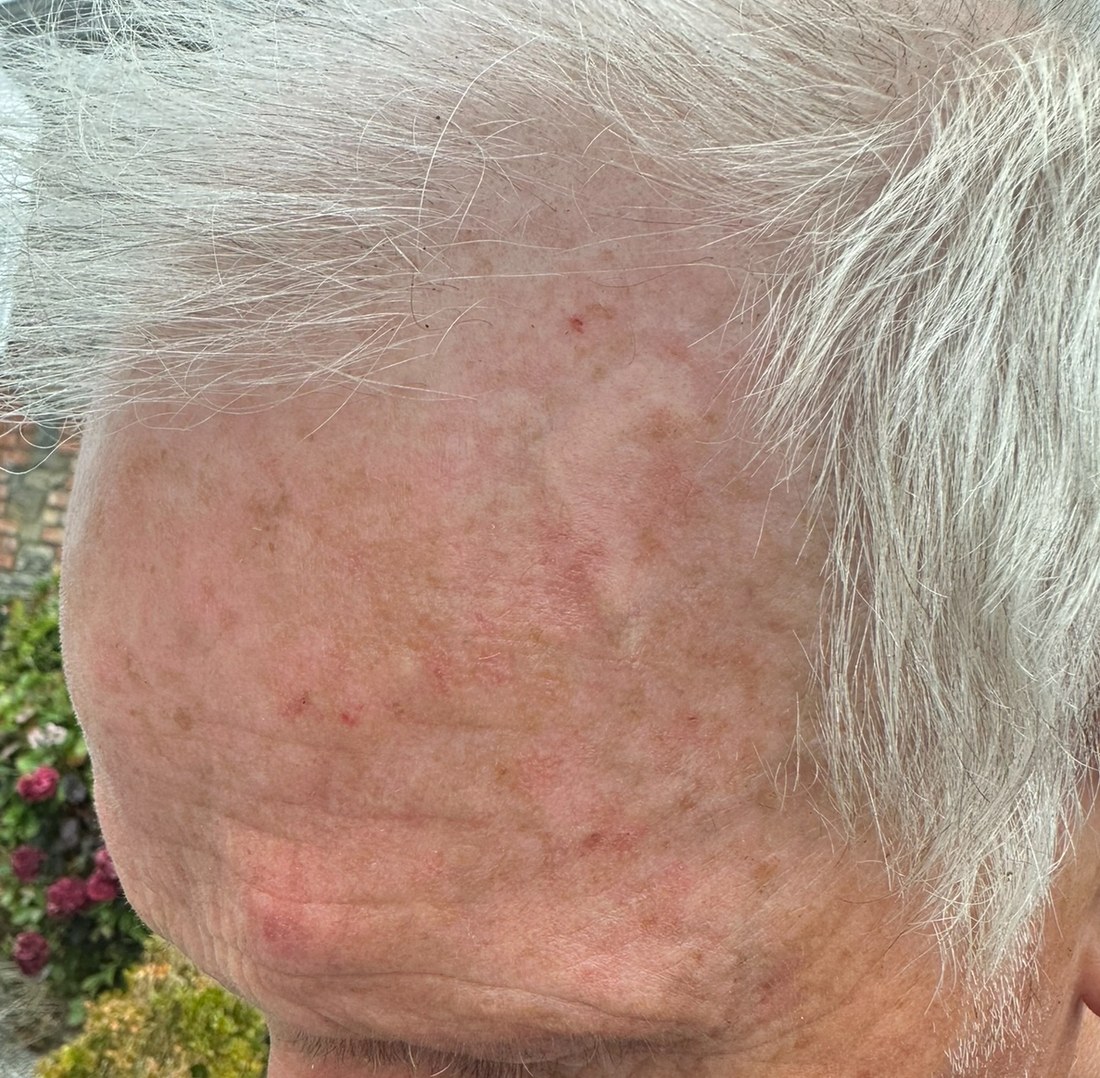
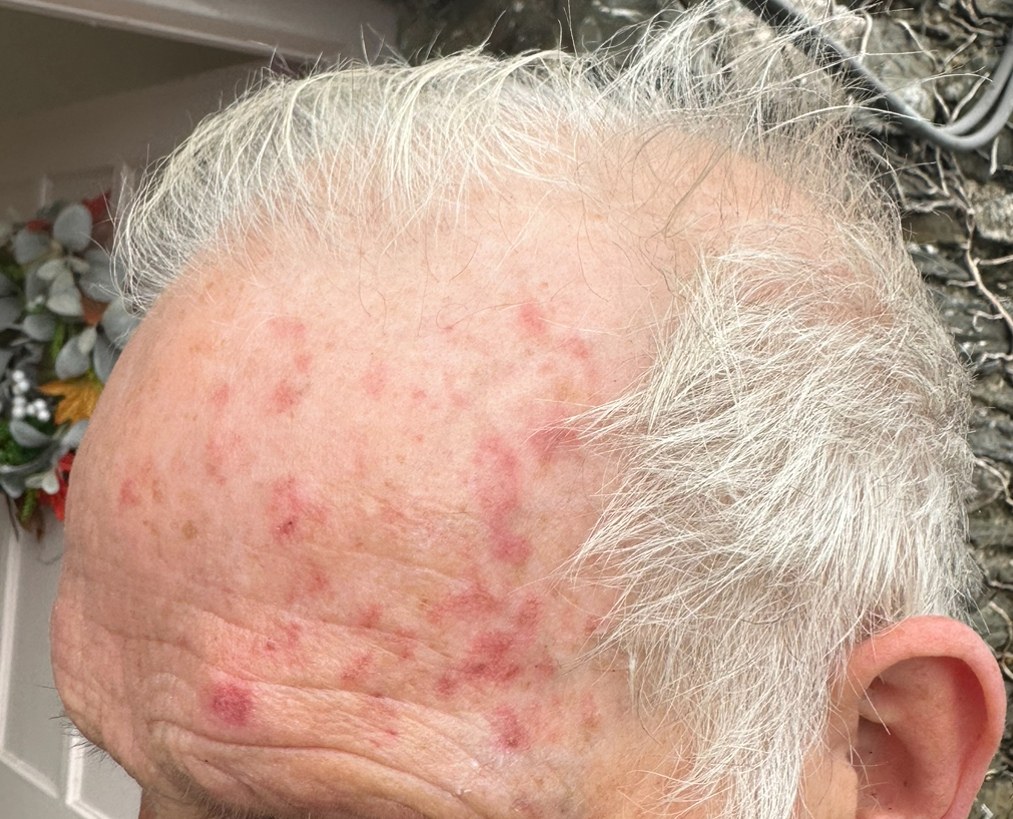
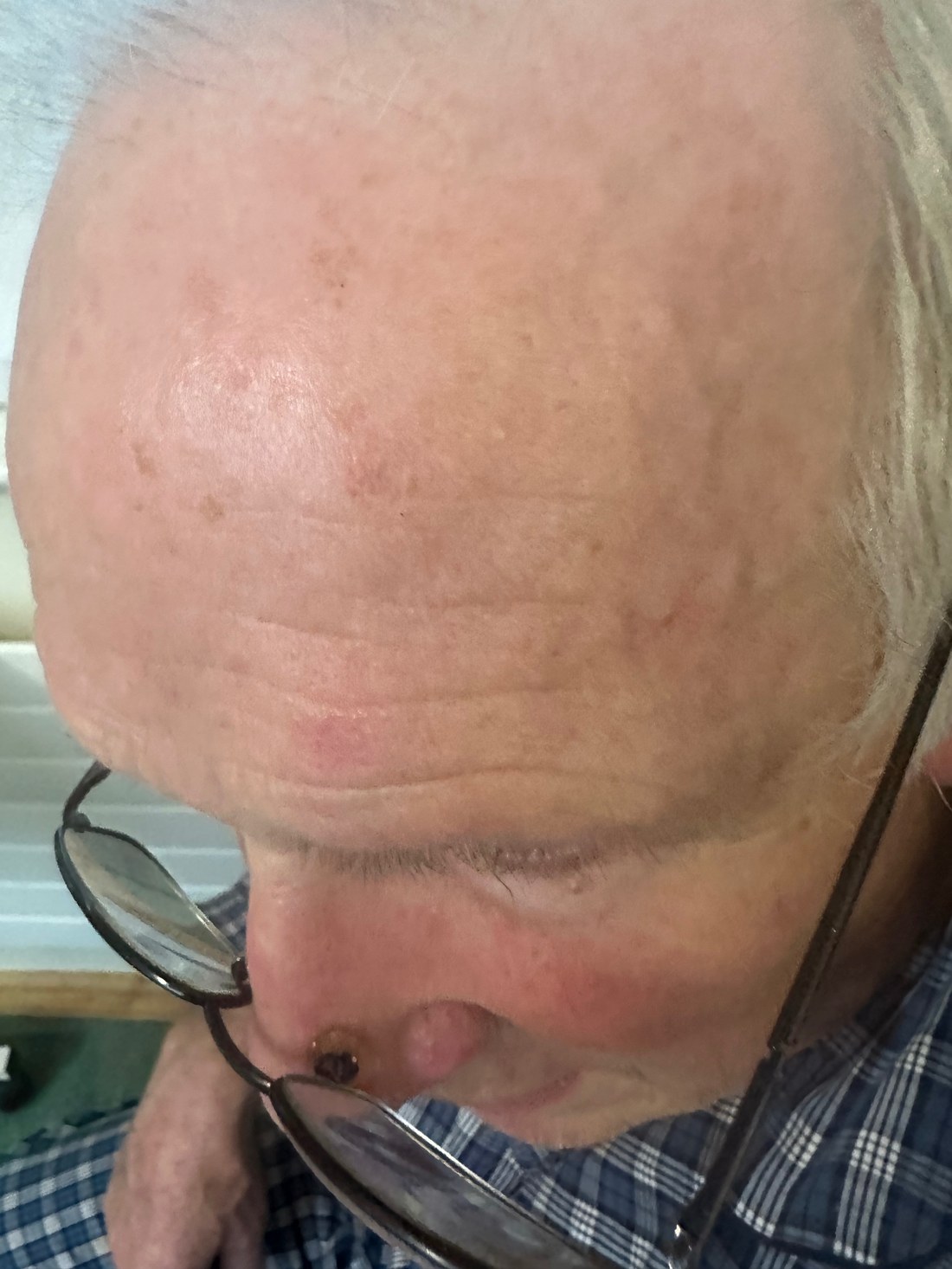
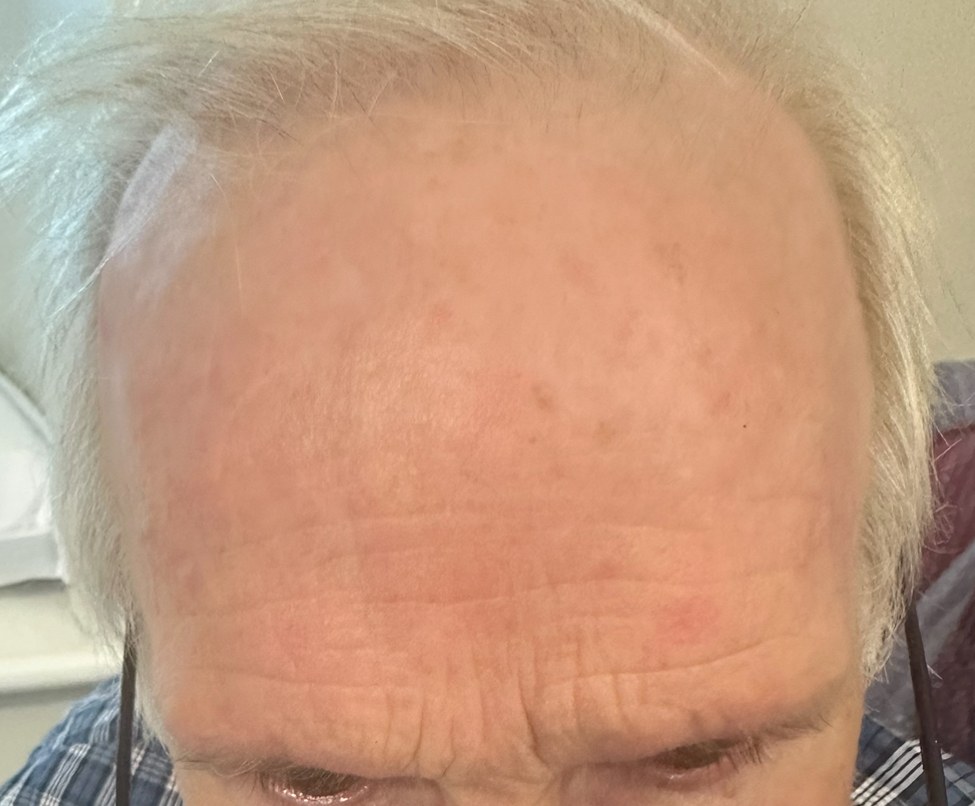
One patient’s forehead before, during and after a course of treatment for actinic keratosis and sun damage. Results vary.

Questions we're asked
What is an actinic keratosis?
What is an actinic keratosis?
An actinic keratosis is a rough, scaly patch of skin caused by long-term sun exposure. It is considered a precancerous lesion because a small proportion can develop into squamous cell carcinoma over time.
Are actinic keratoses skin cancer?
Are actinic keratoses skin cancer?
No. Actinic keratoses are not skin cancer, but they are considered precancerous lesions and should be assessed and monitored appropriately.
What does an actinic keratosis look like?
What does an actinic keratosis look like?
They often appear as rough, dry, scaly patches that may be pink, red, skin-coloured, or brown. They are commonly found on the face, scalp, ears, chest, and hands.
Can actinic keratoses disappear on their own?
Can actinic keratoses disappear on their own?
Some lesions may temporarily improve or seem to disappear, but many persist or recur. Assessment is recommended for any persistent lesion.
Can actinic keratoses become cancerous?
Can actinic keratoses become cancerous?
Yes. A small percentage can progress to squamous cell carcinoma, which is why diagnosis and treatment are important.
Who is most at risk of developing actinic keratoses?
Who is most at risk of developing actinic keratoses?
People with fair skin, light eyes, a history of significant sun exposure, outdoor occupations, previous sunburns, or a history of skin cancer are at higher risk.
What is Efudix?
What is Efudix?
Efudix (5-fluorouracil) is a prescription cream commonly used to treat actinic keratoses and areas of sun-damaged skin. It works by selectively destroying abnormal cells and may cause temporary redness, crusting, and inflammation during treatment.
How can I prevent actinic keratoses?
How can I prevent actinic keratoses?
Daily sunscreen use, protective clothing, hats, avoiding excessive sun exposure, and regular skin checks can help reduce the risk of developing new lesions.
Should I worry about a rough patch that won’t heal?
Should I worry about a rough patch that won’t heal?
Any persistent rough, scaly, crusting, or changing lesion should be assessed by a healthcare professional, particularly if it is located on a sun-exposed area.
What is field cancerisation?”
What is field cancerisation?”
Field cancerisation refers to an area of skin that has accumulated significant sun damage over many years. Although only a few actinic keratoses may be visible, surrounding skin may also contain abnormal sun-damaged cells. Treatments such as prescription creams or laser resurfacing can sometimes be used to treat the wider area rather than focusing solely on individual lesions.
How can I book a dermatology consultation?
How can I book a dermatology consultation?
You can easily arrange a dermatology consultation through the Blush Clinic online booking system or by phoning 087 4223492.

Dr Rowena Hughes
MB BCh BAO, MSc Pharm Med, MBA, PGDip Obs & Gynae, DDermMedical Director, Blush Clinic, Kells · Founder, Dr Rowena's Aesthetics Academy
Dermatology at Blush Clinic is led by Dr Rowena Hughes, a qualified medical doctor with a Diploma in Dermatology (DDerm), postgraduate training in dermatology and over 10 years’ experience working within the HSE as a hospital doctor.
Dr Rowena Hughes provides medical dermatology consultations at Blush Clinic in Kells, Co. Meath. Having completed a postgraduate diploma in dermatology through the Royal College of Surgeons in Ireland, she assesses and manages a wide range of skin conditions including actinic keratoses, acne, rosacea, eczema, psoriasis, hair loss disorders, and sun-damaged skin.
Early diagnosis is particularly important when assessing sun-damaged lesions, as some skin cancers can initially resemble actinic keratoses. Every consultation focuses on accurate diagnosis, evidence-based treatment, and long-term skin health.
Where appropriate, Dr Rowena Hughes may combine prescription treatments with advanced laser technologies, including the Alma Harmony SupErb Er:YAG laser, to address both individual lesions and wider areas of sun-damaged skin.
Ready to book?
Book online any time. To pay by card over the phone, or to reschedule or cancel, call 087 422 3492, Monday to Friday, 8am to 6pm.